Walk into the kickoff of almost any martech transformation and you'll hear the project described by its platform. “We're doing the AEP implementation.” “We're standing up the CDP.”
The whole effort gets named after the tool, the budget gets justified by the tool, and the roadmap is organized around the tool's features. And I understand why—the platform is the thing you can see, point at, and put a logo on a slide.
But after watching enough of these, I've come to believe the naming is backwards. The platform isn't the project. Identity is the project. The platform is just where identity happens to live. And teams that get that order wrong tend to build something impressive that quietly doesn't work, because the hard part was never the software.
Why identity is the thing that actually decides success
Strip a customer data platform down to what it's really for and you get one job: take all the scattered signals a person leaves across your channels and systems, and know they belong to the same person. Everything else the platform does—profiles, audiences, journeys, personalization, measurement—is built on top of that one capability. If it works, all of it works. If it's shaky, none of it is trustworthy, no matter how polished the interface.
Think about what every downstream capability silently assumes:
- A unified profile assumes you've correctly decided which records are the same person. Get identity wrong and you've built a tidy, confident profile of nobody real.
- An audience assumes the people in it are actually distinct, actually who you think they are, and actually eligible. Identity errors mean you're targeting ghosts and duplicates.
- A journey assumes you can follow one person across steps and channels. Break identity and the journey fragments into strangers.
- Attribution and measurement assume the touchpoints you're crediting belong to the same human. Bad identity makes every number downstream subtly fictional.
None of those are platform features you can buy your way into. They're all consequences of whether your identity resolution is right. The platform is the house; identity is the foundation it's poured on. You don't judge a house by its fixtures when the foundation is cracked.
Everything the platform does rests on one decision
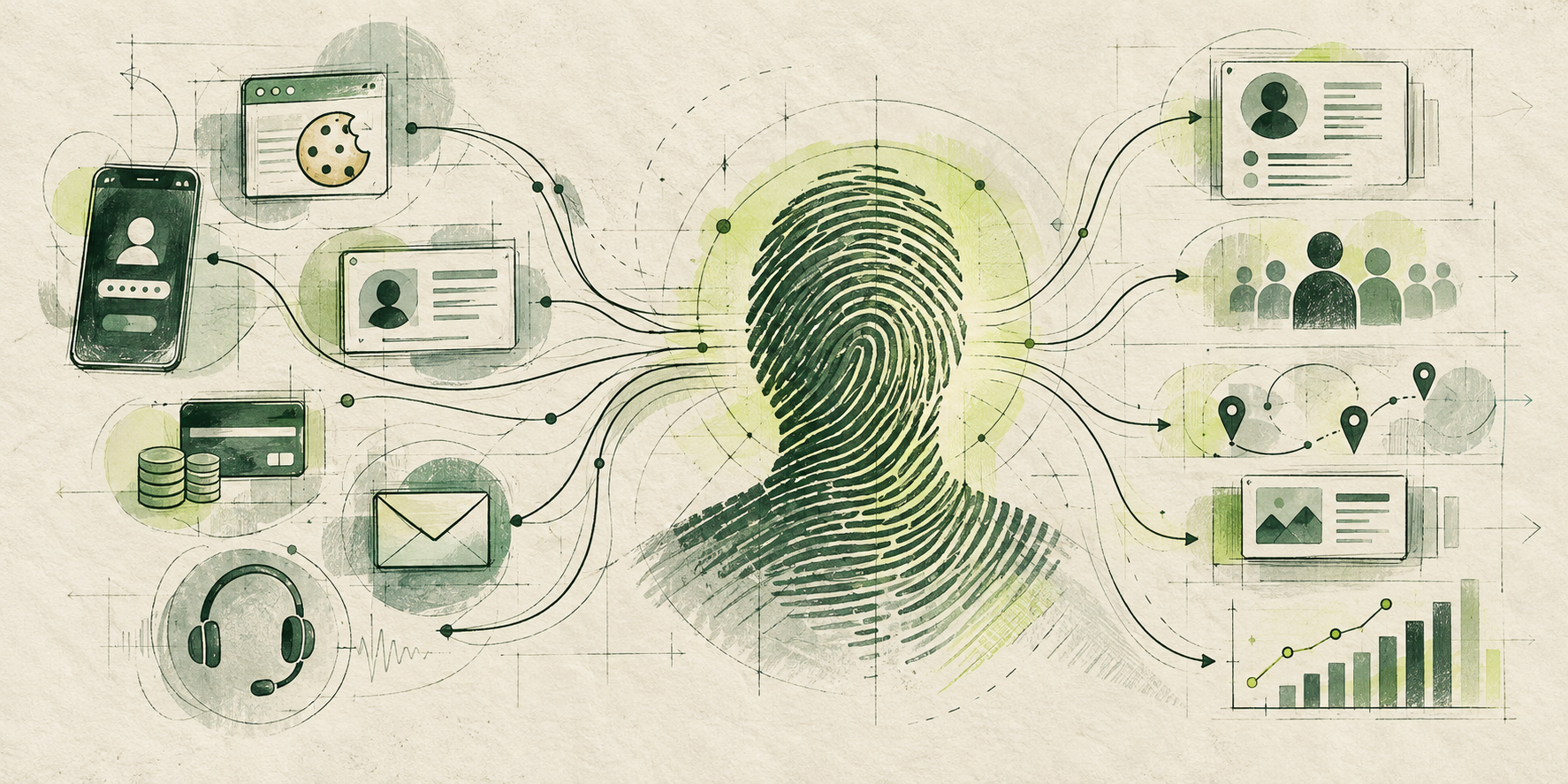
Watch the scattered signals resolve into one person—then everything builds on top of it.
Scattered signals from one person, across systems
Everything downstream silently assumes identity is right
EXPERIENCE SIGNALS · THE MODERN CUSTOMER INTELLIGENCE STACK
Why teams get the order wrong
If identity is so central, why does it keep getting treated as a sub-task buried in the implementation plan? A few reasons, and they're worth naming because they're seductive:
- The platform is concrete; identity is abstract. You can demo a dashboard. You can't demo “we correctly decided these forty records are one person.” So the visible thing gets the attention and the invisible thing gets a backlog ticket.
- Vendors sell platforms, not identity strategy. The sales motion is organized around the product. Identity resolution shows up as a capability of the product, which quietly implies it's the product's problem to solve rather than yours to design.
- Identity decisions feel technical, so they get delegated down. Which identifier is primary, how namespaces are structured, what counts as a match, how to handle shared devices—these look like implementation details. They're actually the most consequential design decisions in the whole program, and they often get made in week three by whoever happened to be configuring that screen.
That last one is the quiet killer. The identity model is frequently decided early, fast, and by the wrong level of the organization—and then everything gets built on top of it before anyone realizes a foundational choice was made casually.
What treating identity as the project actually looks like
Reframing identity as the project, rather than a feature of the platform, changes how you run the whole thing. Concretely:
- Design the identity model before you configure the platform. Decide your primary identifier, your namespaces, your match rules, and your handling of anonymous-to-known transitions as a deliberate design exercise with the right people in the room—not as a side effect of filling in a setup wizard.
- Pick the identifier that's actually stable across systems. The thread that ties a person together has to exist reliably everywhere they show up. A durable internal User ID usually beats email or a device ID, because it survives the places those break.
- Test the failure modes on purpose. Deliberately run the shared-device case, the reused-placeholder-ID case, the person-with-multiple-accounts case. Identity doesn't just fail by not matching; it fails worse by matching two different people into one. Go looking for that before it finds you in production.
- Give identity a named owner with real authority. Not a config screen someone touched once, but a person accountable for the model and empowered to say how matches work. If nobody owns identity, nobody owns whether any of the downstream analytics are true.
- Treat the platform as replaceable around it. If identity is the project, then the platform is an implementation detail you should be able to change without rebuilding your understanding of who your customers are. Keep the identity logic and mappings portable, documented, and yours.
The reframe
Build the project around identity.
Here's the test I'd apply to any martech transformation. Ask what happens to the effort if you swapped the platform for a competitor. If the answer is “we'd rebuild the integrations but our understanding of who our customers are would survive”—you built the project around identity, and you're in good shape.
If the answer is “we'd lose everything, because all of it lives inside the platform”—you built the project around the tool, and you've mistaken the house for the foundation.
The platform matters. It's where the work lives, it's what your teams touch every day, and a good one makes everything easier. But it is not the thing that determines whether your customer data is trustworthy. Identity is. Name the project after that, resource it like that, and own it like that—and the platform becomes what it should have been all along: just the place where your identity strategy happens to live.